
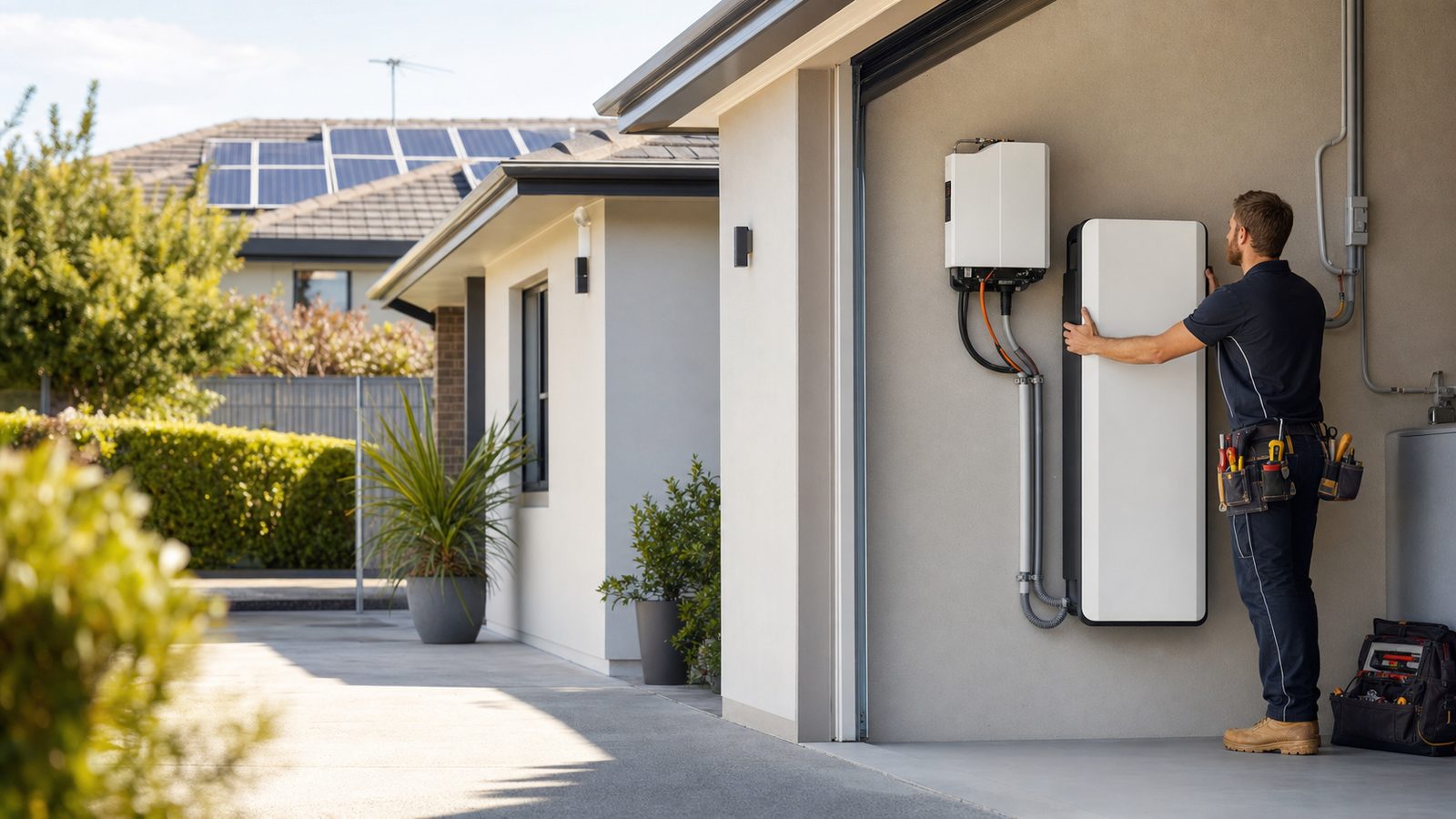
Make an inventory before shopping for a battery
Find the original solar proposal, invoice, equipment manuals and connection documents if available. Record the panel and inverter model numbers, installation date and any changes since then. Photographs of accessible labels can help, but do not remove covers or climb onto the roof to obtain them. Ask the original installer or manufacturer for records if important details are missing.
Include equipment that may be easy to overlook: consumption monitoring, export control, an existing energy-management device and any separate EV charger. The proposed battery must coexist with the whole installation. A quote based only on panel capacity may miss the controls that determine how energy moves around the house. Put all known devices on the same inventory, even when you are unsure whether they are relevant.
For a Pakenham household with an older system, age alone does not settle whether it should stay. A working inverter with suitable characteristics and available support presents a different decision from equipment with recurring faults. Ask the designer to explain the condition and compatibility findings separately. That prevents a vague recommendation to upgrade everything from concealing which component actually limits the plan.
Define the job the battery must do
Write one primary objective. Using daytime exports after sunset, maintaining selected circuits during outages and responding to an electricity tariff are related but different tasks. A battery designed for one purpose may not deliver another without additional equipment or settings. If backup matters, name the appliances and circuits rather than saying whole house and assuming everyone interprets that phrase the same way.
Record your evening imports and daytime exports for a representative period. Include seasonal differences where the data is available. The battery needs a source of charging energy as well as demand to serve later. An existing array that already supplies most daytime use may have less surplus than expected. A retrofit should be assessed against the energy actually available, not just the capacity printed on panel labels.
Describe expected changes such as an EV, electric hot water or more time working from home. Separate committed changes from possibilities. Ask for a proposal that works for the current household and identifies what would need revisiting when those changes happen. Buying for every imagined future load can obscure a simpler staged solution, while ignoring a confirmed purchase can make the present scope too narrow.
Compare retaining the inverter with replacing it
An AC-coupled arrangement uses a separate battery inverter alongside the solar system, while a DC-coupled arrangement commonly uses a hybrid inverter for solar and battery. The Australian Government battery guide describes these broad approaches. Neither label alone proves suitability for your house. The question is which complete design works with the equipment, controls and objectives you have documented.
Ask for two alternatives where technically reasonable: retain the existing inverter and add the battery system, or replace it as part of a hybrid design. Each alternative should state retained components, removed components, monitoring arrangements and any changed wiring scope. If one route is rejected, ask for the specific reason. A compatibility limitation is useful evidence; a general statement that new is better is not.
Look at operational complexity as well as the initial equipment list. Two independent apps may be acceptable if their responsibilities are clear. One integrated app may be convenient, but it does not compensate for missing measurement or unclear service responsibility. Ask who will investigate a problem that crosses the boundary between retained solar equipment and the new battery. The homeowner should not have to determine which supplier is at fault.
| Approach | What may stay | What needs evidence |
|---|---|---|
| Separate battery inverter | Existing solar inverter and panels | Combined controls, monitoring and backup behaviour |
| Hybrid replacement | Suitable existing panels | Panel compatibility and reasons to replace the inverter |
| Staged repair then retrofit | Healthy equipment after repair | Baseline performance and separate repair scope |
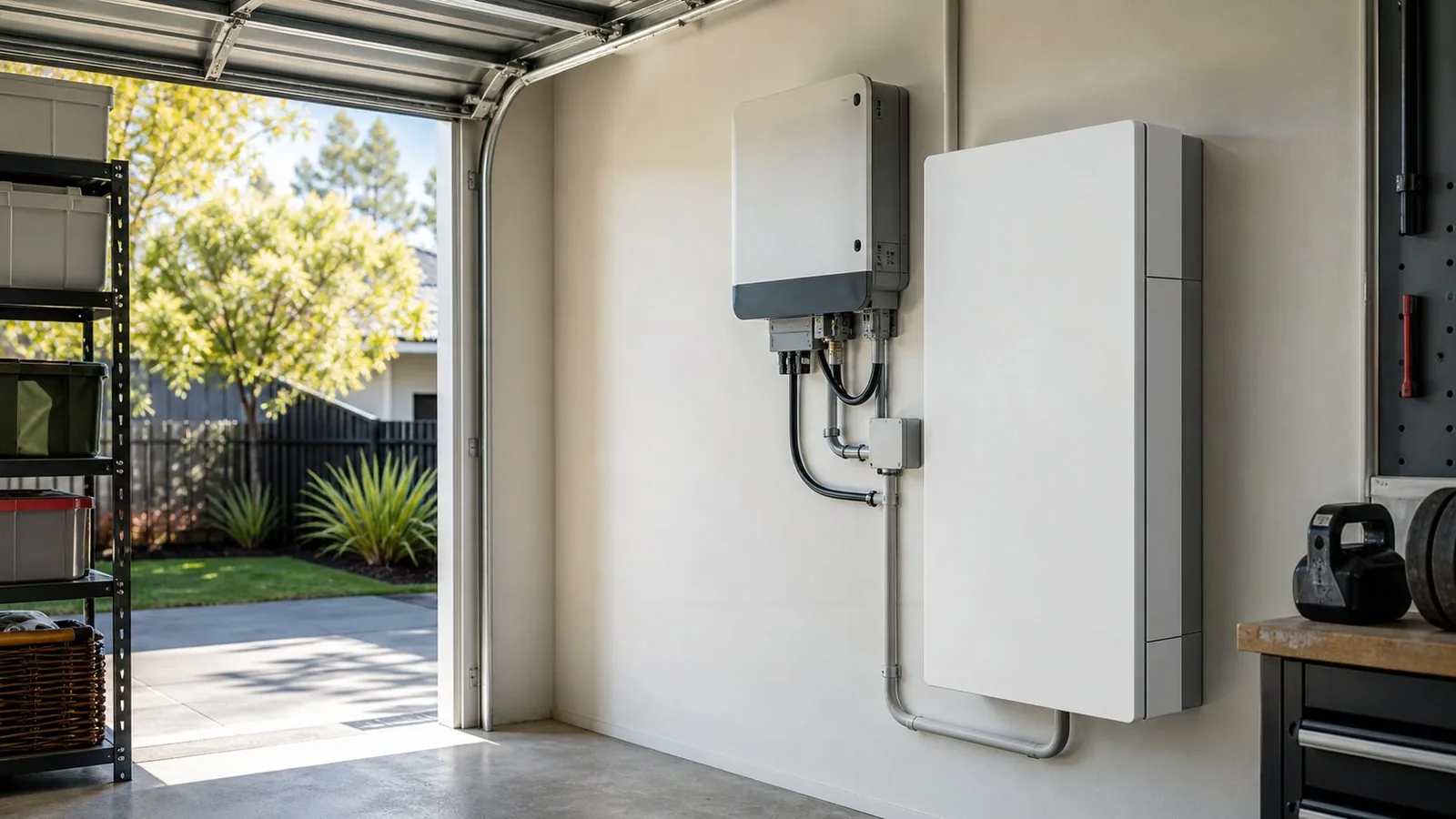
Treat compatibility as a documented combination
Battery-ready can mean different things in marketing. It may refer to a particular family of compatible batteries, require extra hardware, depend on software or describe only a future possibility. Request the exact combination proposed for your home. The inverter model, battery model, control equipment and relevant configuration should appear together in the design, rather than in separate brochures.
If the original equipment is no longer sold, ask how that affects the planned retrofit and future support. Do not assume that a newer battery from the same brand automatically connects. Equally, do not assume that keeping older panels is impossible just because the battery is new. The designer needs to evaluate the actual electrical and product requirements of the combined installation.
Get substitutions explained before acceptance. A change to a battery module or inverter can alter compatibility, available functions and monitoring. A proposal allowing equivalent equipment should identify how equivalence is assessed for the functions you need. Keep any revised equipment schedule with the final agreement. That record is more useful than relying on a salesperson's verbal statement that everything will work together.
Clarify backup as a separate integration question
Normal grid-connected operation and outage operation are different conditions. Ask whether the retained solar inverter will operate within the proposed backup arrangement, whether it can recharge the battery during an outage and what happens when the battery becomes depleted. Do not infer these behaviours merely because the solar and battery both work while the grid is available.
Request a list of backed-up circuits and the limits relevant to their loads. Include appliance startup behaviour and which combinations should not run together. A fridge, a household pump and a large cooking appliance create different demands. The designer needs the actual appliance details to explain the intended operating envelope. Essential medical or other critical needs require a separate reliable plan, not a general household battery assumption.
Ask how the backup function will be demonstrated at handover by the installer. Record what was tested, which circuits were included and any conditions of the demonstration. The homeowner should not improvise an electrical isolation test later. A written operating guide should explain ordinary use, alerts and the safe action to take when behaviour differs from the demonstrated setup.
Separate old problems from new equipment
Before the retrofit, save a baseline of existing generation and any recurring error messages. Ask for a health assessment of equipment being retained. If the original system has an unresolved fault, record its diagnosis and repair scope separately. Adding storage does not by itself repair poor generation, damaged wiring or incorrect monitoring. Mixing the work together makes it harder to establish what changed.
A baseline also helps after installation. Compare the monitoring definitions before and after the retrofit, because a new platform may report different energy boundaries. Ask which readings are measured and which are calculated. If historic data cannot be transferred, save it before an old account or gateway is removed. Otherwise a useful record of system behaviour may disappear during an otherwise successful upgrade.
For an existing warranty or service arrangement, ask the relevant provider how the proposed work interacts with its responsibilities. Get the answer in writing where it affects the decision. Do not assume every change cancels cover, or that every retained component is now covered by the new installer. The practical goal is to know who supports each part and how a combined-system fault will be investigated.
A retrofit decision with three sensible outcomes
Hypothetical example: a Cardinia Lakes household has functioning solar, substantial afternoon exports and growing evening demand. It wants storage but has no current backup requirement. A proposal retaining the inverter is compared with a hybrid replacement using the same consumption record. The homeowner asks what additional benefit the replacement delivers, rather than treating the newer inverter as automatically necessary.
During assessment, the designer finds that one proposal needs an extra monitoring device and a different cable route. Those items are added to the scope before comparison. The family can now decide between two complete systems. It might retain the inverter, replace it for a documented benefit, or postpone storage while gathering better winter data. All three are legitimate outcomes when supported by the evidence.
Now change the example: the same household decides that outage operation of a particular pump is essential. The earlier comparison is no longer sufficient. The designer must revisit backup integration and the appliance requirement. This illustrates why defining the task early matters. A battery purchase should not progress on an old brief after the household's main objective has changed.
One further comparison is the disruption involved in each route. Ask whether household supply will be interrupted, what preparation is needed and how the work interacts with home-office equipment or refrigerated items. The installer should explain the planned sequence and any uncertainty that could extend it. If an existing monitoring account is being replaced, download useful history beforehand and confirm who will create the new homeowner account. These practical items do not decide electrical suitability, but they distinguish a complete retrofit proposal from an equipment-only offer. Record which actions belong to the household and which belong to the installation team so neither assumes the other has completed them.
Specify installation, handover and future changes
The final scope should show where the battery, controls and any new switchboard equipment will go. Identify the cable route, any building work and responsibility for making good affected surfaces. Solar Victoria advises that retrofitting a battery requires an amendment to the connection agreement. Ask who manages the applicable connection process for your address and what information the homeowner needs to provide.
Arrange homeowner access to monitoring at handover, using an account you control. Confirm how to contact support, retrieve useful reports and recognise a communications problem. Record the selected operating mode and any reserve settings in understandable language. Ask which settings the owner may change and which belong to the installer. A functioning system is easier to manage when its original configuration is documented.
Keep a final equipment inventory, updated drawing, manuals and service contacts together. If future panels, a charger or another battery module are contemplated, ask which checks must be repeated first. Compatibility and site conditions can change, so a present design should not be described as an unconditional promise of expansion. The planner below turns your current equipment and objective into a focused retrofit enquiry.